


Li Yao PhD
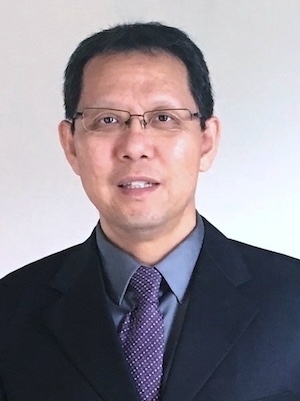
Li Yao PhD
Professor
Biological Sciences · Fairmount College of Liberal Arts and Sciences
Hubbard Hall 529
Main Campus
Campus Box 26
Areas of Research Interest
- Electric fields guided brain neuron migration
Endogenous electrical signals are present in many developing systems and crucial cellular behaviours such as neuronal cell division, cell migration and cell differentiation are all under the influence of such endogenous electrical cues. Effectively directed neuron migration is critical for development and repair in the central nervous system. We recently demonstrated that small electric fields not only guide axonal growth, but also can direct the earlier events of neuronal migration and neuronal cell division. This raises the possibility that applied or endogenous electric fields, perhaps in combination, may direct transplanted neural stem cells, or regenerating neurons, to the desired site after brain injury or neuron degeneration. We are interested in investigating the mechanism of electric fields guided neuron migration and the solutions for the application of electric fields in guiding neuron migration in neurogenesis within the central nervous system.
- Spinal cord repair and regeneration
The limited functional improvement in in vivo models of spinal cord injury has prevented advancement of regenerative therapy to clinical use due to the multifaceted nature of spinal cord injuries. Biodegradable polymers can simultaneously provide structural guidance at a cellular level and a reservoir for sustained gene delivery. We are interested in developing the functionalised biomaterial scaffolds targeting injury mechanisms at the molecular, cellular and tissue levels of spinal cord injury.
- Peripheral nerve repair and regeneration
Axonal regeneration after injury or disease is the major challenge in both peripheral and central nervous system. In peripheral nerve regeneration, neural conduits have been investigated to bridge nerve defects. In our recent study, the advance in the design of engineered scaffolds that mimic peripheral nerve multiple basal lamina have improved guided axonal regeneration in vivo. Neural tissue engineering is a promising approach for axonal regeneration of critical nerve injury by preventing inhibitory factors and enhancing guided axonal growth.
Areas of Teaching Interest
Molecular Cell Biology (BIOL 420)
Developmental Biology (BIOL 540)
Neurobiology (BIOL 640G)
Publications
Publications
-
Kayla Cantu, Teresa Shippy, Li Yao*. Nanofibrous matrices modulating glioma cell migration and proliferation and the exploration of molecular mechanism. ACS Applied Biomaterials. 07/2026. doi.org/10.1021/acsabm.6c00146.
- Li Yao*, Karen Bustamante-Fuchs, Kayla Cantu, Teresa Shippy. Investigating the Cellular Activity and Differential Gene Expression of Human Astrocytes in Interaction with Protein Composite Nanofibers. Neurochemical Research. 07/2026. DOI: 10.1007/s11064-026-04855-y.
- Li Yao*, Nischal Neupane, Teresa Shippy. Interaction of matrix components and cells regulating cellular and molecular processes of glioma cells. Brain Research.10/2025. doi.org/10.1016/j.brainres.2025.150006.
- Li Yao*, Nikol Flynn, Pranita Kaphle. Effects of cell culture time and cytokines on migration of dental pulp stem cell-derived chondrogenic cells in collagen hydrogels. Physiol Rep. 2024 Sep;12(18):e70063.
- Li Yao*, Haneesha Vishwa Sai, Teresa Shippy, Bin Li. The cellular and transcriptional response of human astrocytes to a hybrid protein material. ACS Applied Biomaterials 2024:7: 5. 2887–2898.
- Li Yao*, Ryan Brice, Teresa Shippy. A protein composite neural scaffold modulates astrocyte migration and transcriptome profile. Macromolecular Bioscience. 01/2022
- Li Yao*, Jacques Blasi, Teresa Shippy, Ryan Brice. Transcriptomic analysis reveals the immune response of human microglia to a soy protein and collagen hybrid bioscaffold. Heliyon. 01/2023.
- Li Yao*, Kimmy Tran, Diana Nguyen. Collagen hydrogel serves as a matrix to mediate glioma cell migration induced by an electrical signal. Gels. 2022, 8, 545.
- Leyla Saeednia, Li Yao, Ramazan Asmatulu. Chitosan and fullerene hybrid hydrogel for drug delivery system with enhanced antitumor cell effects. Materials Today: Proceedings. Elsevier. 2022, 71, 130-137.
- Muhammet Ceylan, Ramazan Asmatulu, Jianhao Jiang, Aybala Usta, Tanghong Jia, Li Yao, Shang-you Yang. Synthesis and Evaluation of Electrospun PCL-Plasmid DNA Nanofibers for Post Cancer Treatments. Materials Today: Proceedings. Elsevier. 2022, 71, 58-63.
- Kimmy Tran, Ryan, Brice, Li Yao*. Bioscaffold–based study of glioblastoma cell behavior and drug delivery for tumor therapy. Neurochemistry International. 04/2021.
- Li Yao*, Shippy T, Li YC. Genetic analysis of the molecular regulation of electric fields-guided glia migration. Scientific Reports. 2020 Oct 8;10(1):16821.
- Li Yao*, Ashley DeBrot. Fabrication and Characterization of a Protein Composite Conduit for Neural Regeneration. ACS Appl. Bio Mater. 09/2019.
- Madhulika Srikanth, Ramazan Asmatulu*, Kim Cluff, Li Yao*. Material characterization and bioanalysis of hybrid scaffolds of carbon nanomaterial and polymer nanofibers. ACS Omega. 02/2019
- Leyla Saeednia, Li Yao, Kim Cluff, and Ramazan Asmatulu. Sustained Releasing of Methotrexate from Injectable and Thermosensitive Chitosan-Carbon Nanotube Hybrid Hydrogels Effectively Controls Tumor Cell Growth. ACS Omega. 2019, 4(2) 4044-4048.
- Pranita Kaphle, Yongchao Li, Li Yao*. The mechanical and pharmacological regulation of glioblastoma cell migration in 3D matrices. Journal of Cellular Physiology. 07/2018.
- Ashley Debrot, Li Yao*. The combination of induced pluripotent stem cells and bioscaffolds holds promise for spinal cord regeneration. Neural Regeneration Research. 07/2018
- Yao L*, Flynn N. Dental pulp stem cell-derived chondrogenic cells demonstrate differential cell motility in type I and type II collagen hydrogels. The Spine Journal. 2018 Jun;18(6):1070-1080.
- Saeednia L, Yao L, Berndt M, Cluff K, and Asmatulu R. Structural and biological properties of thermosensitive chitosan-graphene hybrid hydrogels for sustained drug delivery applications. J Biomed Mater Res A. 2017 Sep;105(9):2381-2390.
- Marcus Berndt, Yongchao Li, Negar Seyedhassantehrani; Li Yao*. Fabrication and characterization of microspheres encapsulating astrocytes for neural regeneration. ACS Biomaterials Science & Engineering. 2017 Jul 10;3(7):1313-1321.
- Yao L*, Li YC. The role of electric fields-guided migration of neural cells and stem cells in neural regeneration. Stem cell reviews and reports. 2016 April. 2016 Jun;12(3):365-75.
- Seyedhassantehrani N, Li Y, Yao L*. Dynamic behaviors of astrocytes in chemically modified fibrin and collagen hydrogels. Integrative Biology. 2016 May 16;8(5):624-34.
- Mahapatro A*, Negron T, Arshanapalli S, Gomes A, Yao L. Fabrication, Biofunctionality and Biocompatibility Evaluations of Octadecyltrichlorosilane Nano Coatings on Magnesium Alloy. Journal of Nanoengineering and Nanomanufacturing, 2015 December. 2015, 5, 294-303
- Priyadarshani P, Li YC, Yang SY, Yao L*. Injectable hydrogel provides growth-permissive environment for human nucleus pulposus cells. Journal of Biomedical Materials Research: Part A. 2016 Feb;104(2):419-26.
- Priyadarshani P, Li YC, Yao L*. Advances in biological therapy for nucleus pulposus regeneration. Osteoarthritis and Cartilage. 2016 Feb;24(2):206-12.
- Li YC, Wang X, Yao L*. Directional migration and transcriptional analysis of oligodendrocyte precursors subjected to stimulation of electrical signal. American Journal of Physiology – Cell Physiology. 2015 Oct 15;309(8):C532-40.
- Li YC, Wang PS, Lucas G, Li R, Yao L*. ARP2/3 complex is required for directional migration of neural stem cell-derived oligodendrocyte precursors in electric fields. Stem cell research and therapy. 2015 Mar 21;6:41.
- Yao L*, Li YC, Knapp J, Smith P. Exploration of molecular pathways mediating electric field-directed Schwann cell migration by RNA-Seq. Journal of Cellular Physiology. 2015;230:1515-24 .
- Li YC, Weiss M, Yao L*. Directed Migration of Embryonic Stem Cell-derived Neural Cells In An Applied Electric Field. Stem Cell Reviews and reports. 2014 Oct; 10(5):643-662.
- Shrestha B, Coykendall K, Li YC, Moon A., Priyadarshani P., Yao L*. Repair of injured spinal cord using biomaterial scaffolds and stem cells. Stem Cell Research and Therapy. 2014, Aug 1; 5(4):91.
- Li YC, Ceylan M, Shrestha B , Wang H, Lu Q, Asmatulu R, Yao L*. Nanofibers Support Oligodendrocyte Precursor Cell Growth and Function as a Neuron-Free Model for Myelination Study. Biomacromolecules. 2014, 13;15:319-26.
- Yao L*, Phan F, Li YC. Collagen microsphere serving as a cell carrier supports oligodendrocyte progenitor cell growth and differentiation for neurite myelination in vitro. Stem Cell Research & Therapy 2013, 4:109.
- Yao L, Daly B, Newland B, Yao S, Wang W, Chen B, Madigan N, Windebank A, Pandit A. Improving axonal regeneration of transected spinal cord using multichannel collagen conduits delivering neurotrophin-3 gene. Gene therapy. 2013; 20:1149-57.
- Yao L*, Yao S, Daly B, Hendry W, Windebank A, Pandit A. Non-viral Gene Therapy for Spinal Cord Regeneration. Drug Discovery Today. 2012;17:998-1005.
- Daly W, Yao L, Abu-rub M, O’Connell C, Zeugolis D, Windebank A, Pandit A. Intraluminal guidance structures decreases axonal mismatch of distal nerve targets during peripheral nerve repair: the influence of intraluminal fibres on peripheral nerve repair. Biomaterials. 2012;33:6660-71.
- Stefan Weigel, Thomas Osterwalder, Ursina Tobler, Li Yao, Manuel Wiesli, Thomas Lehnert, Abhay Pandit, Arie Bruinink. Surface microstructures on plane substrates and textile fibers guide neurite outgrowth: a scaffold solution to push limits of critical nerve defect regeneration? PloS One. 2012; 7: e50714.
- Daly B, Yao L, Windebank A, Zeugolis, D, Pandit A. The biomaterials approach to peripheral nerve regeneration: Bridging the peripheral nerve gap and enhancing functional recovery. Journal of the Royal Society Interface. 2012, 9: 202-221.
- Yao L, Pandit A, Yao S, McCaig C. Electric fields guide neuron migration, a novel approach in neurogenesis. Tissue Engineering, Part B: Review 2011;17:143-53.
- Yao L, Bestwick CS, Bestwick LA, Aspden RM, Maffulli N. Non-immortalized human tenocyte cultures as a vehicle for understanding cellular aspects to tendinopathy. Transl Med UniSa. 2011 Oct 17;1:173-94
- Yao L, Kristen Billiar, Windebank A, Pandit A. Multi-channeled Collagen Conduits for Peripheral Nerve Regeneration: Design, Fabrication and Characterization. Tissue Engineering, Part C. 2010;16:1585-96.
- Yao L, De Ruiter G, Huan W, Knight A, Spinner R, Yaszemski M, Windebank A, Pandit. Controlling Dispersion of axonal regeneration using a multichannel nerve conduit. Biomaterials 2010;31:5789-5797.
- Doleski S, Yao L, Pandit A and Elvira C. NGF release from new thermoresponsive collagen-PolyNIPAam polymer networks support neuronal cell growth and differentiation. Journal of Biomedical Material Research Part A. 2010;94:457-65.
- Yao L, Damodaran D, Nikolskaya, Natalia, Adrienne Gorman Windebank A, , Pandit A. Guided neurite growth on a graded laminin conjugated enzymatically cross-Linked collagen scaffold. Journal of Biomedical Material Research Part A. 2010;92:484-92.
- Yao L, McCaig C, Zhao M. Electrical signals direct neuron division, neuron migration and polarize neuronal organelles. Hippocampus. 2009;19:855-68.
- Yao L, O’Brien N, Windebank A, Pandit A. Orienting neurite growth in electrospun fibrous neural conduits. J Biomed Mater Res B Appl Biomater. 2009;90:483-91
- Yao L, Wang SG, Cui WJ, Sherlock R, O’Connell C, Damodaran D, Gorman A, Windebank A, Pandit A. Effect of Functionalised Micropatterned PLGA on Guided Neurite Growth. Acta Biomater. 2009;5:580-8.
- Yao L, Shanley L, McCaig C, Zhao M. Small applied electric fields guide migration of hippocampal neurons. Journal of Cellular Physiology. 2008; 216:527-35.
- Burugapalli K, Thapasimuttu A, Chan JC, Yao L, Brody S, Kelly JL, Pandit A. Scaffold with a natural mesh-like architecture: isolation, structural, and in vitro characterization. Biomacromolecules. 2007;8:928-36
- Brody S, McMahon J, Yao L, O’brien M, Dockery P, Pandit A. The effect of cholecyst-derived extracellular matrix on the phenotypic behaviour of valvular endothelial and valvular interstitial cells. Biomaterials. 2007;28:1461-9.
- Yao L, Bestwick, CS, Bestwick LA, Maffulli, N and Aspden, RM. Phenotypic drift in human tenocyte culture. Tissue Engineering. 2006;12:1843-9.
Book and Chapters
- Linh Huynh, Li Yao*. Biomaterial Nanofiber Scaffolds for Neural Regeneration. CRC Press. Taylor & Francis. 07/2025
- Karina Petkova, Prabriti Neupane, Sarah Schmitt, Nischal Neupane, Rajprasad Loganathan, Li Yao*. Significant Progress in Stem Cell Treatment for Alzheimer’s Disease: A Critical Review. CRC Press. Taylor & Francis. 07/2025.
- Ryan Brice, Haneesha Vishwa Sai, Kimmy Tran, Jade Garcia, Ramirez Munoz, Li Yao*. The application of stem cells for the therapy of Parkinson’s disease. Handbook of Stem Cells – MRW2. Springer. In press.
- Haneesha Vishwa Sai, Ryan Brice, Li Yao*. Molecular role of Schwann cell migration in repair and regeneration of nervous tissue. Horizons in Neuroscience Research. Volume 48. Nova Science Publishers. 10/2022.
- Haneesha Vishwa Sai, Ryan Brice, Li Yao*. Astrocytes migration and its molecular role in recuperation of damaged nervous tissue. Horizons in Neuroscience Research. Volume 48. Nova Science Publishers. 10/2022.
- Ryan Brice, Joshua Kehler, Li Yao*. Combining bioscaffolds and iPSCs in the treatment of neural trauma and Alzheimer’s disease. in Methods in iPSC Technology, Volume 9, 1st Edition, Editor, Alexander Birbrair, Elsevier. 06. 2021.
- Li Yao*, Ashley DeBrot. Preparation of bioscaffolds delivering stem cells for neural regeneration. in Stem Cells and Tissue Repair: Methods and Protocols, Second. Editor, Chrissa Kioussi. Springer. 01.2020
- Yao L. Glial cell engineering in neural regeneration (Book). Springer.11/2018. ISBN-13: 978-3030021030.
- Chapter 1. Yao L, Priyadashani P. Schwann cell tissue engineering in neural regeneration.
- Chapter 2. Srikanth M, Yao L, Asmatulu R. Advances in the research of astrocyte function in neural regeneration.
- Chapter 3. Kaphle P, Yao L, Kehler J. Stem Cells and biomaterials based-neural repair enhances spinal axonal regeneration.
- Chapter 4. Yao L, Skrebes M. Enhancement of axonal myelination in wounded spinal cord using oligodendrocyte precursor cell transplantation.
- Chapter 5. Yao L, Li YC. Electric field-guided cell migration, polarization, and division: An emerging therapy in neural regeneration.
- Chapter 6. Tran H, Yao L. Vascularization in the spinal cord: the pathological process and therapeutic approach.
- Yao L. Cell Transplantation for Myelination of Axons in Spinal Cord Repair (pp49-74). in Swanson D (eds), Oligodendrocytes: Biology, Functions and Role in the Pathology of Diseases Neuroscience Research Progress, Nova Science Publishers, Hauppauge, NY, USA. 2015 October.
Patents
- Composite neural conduit. Li Yao. US Patent (US 12,383, 272, B2). 08/2025.
- Multichannel collagen nerve conduit for nerve repair. Abhay Pandit, Li Yao, Anthony Windebank. US patent, 8926886 (2015). European Patent, EP2380601.
- Enzyme linked immunosorbent assay for type II collagen. DanHui Zhao, ChengWen Li, Yan Zhang, Li Yao. China patent, 00130134.9
- Apparatus and method for neural regeneration. Li Yao. US patent application number 62/519,550 (US) (06/14/2017), PCT filedPCT/US2018/037585.
Professional Experience
- 08/2023 – present — Professor, Department of Biological Sciences, Wichita State University, Wichita, KS
-
08/2017 – 08/2023 — Associate Professor, Department of Biological Sciences, Wichita State University, Kansas
- 08/2011 – 08/2017 — Assistant Professor, Department of Biological Sciences, Wichita State University, Kansas
- 08/2012 – present — Adjunct Assistant Professor, Department of Medical Sciences, School of Medicine-Wichita, University of Kansas Medical Center, Wichita, Kansas
- 12/2010 — Visiting Research Fellow, Department of Neurology, Mayo Clinic, Minnesota
- 01/2009 – 09/2009 — Postdoctoral Research Fellow, Department of Neurology, Mayo Clinic, Minnesota
- 04/2007 – 05/2007 — Visiting Research Fellow, EMPA-Swiss Federal laboratory for Materials Sciences and Technology, Switzerland
- 09/2005 – 06/2011 — Postdoctoral Research Fellow, Network of Excellence for Functional Biomaterials, National Center for Biomedical Engineering Science, National University of Ireland, Galway
- 09/2005 – 03/2007 — Marie Curie Research Fellow, National Center for Biomedical Engineering Science, National University of Ireland, Galway
Clinical Experience
- 08/2000 – 10/2001–Orthopaedic Surgeon, Beijing JiShuiTan Hospital, Peking University Medical Center, Beijing
- 08/1994 – 08/1997–Resident Doctor of Surgery, Beijing ChaoYang Hospital, Capital Medical University, Beijing
Areas of Service
Acta Biomaterialia; Journal of Biomedical Materials Research: Part B – Applied Biomaterials; Journal of Biomedical Materials Research: Part A; Journal of Anatomy; Journal of Royal Society Interface; Soft Matter; Tissue Engineering, Part C; European Cells and Materials Journal
Additional Information
| Institution | Degree | Year | Field of Study |
|---|---|---|---|
| Capital Medical University, Beijing | MD | 1994 | Clinical Medicine |
| Beijing Institute of Traumatology and Orthopaedic Surgery, Beijing JiShuiTan Hospital, Peking University Medical Center, Beijing | MS | 2000 | Orthopaedic Surgery |
| University of Aberdeen, UK | PhD | 2006 | Biomedical Sciences |