


Gisuk Hwang Ph.D., Dr.
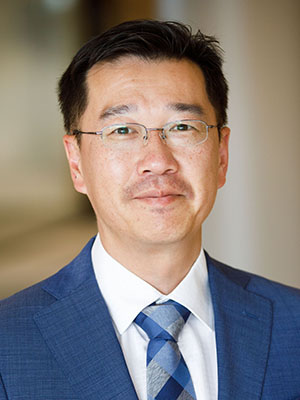
Gisuk Hwang Ph.D., Dr.
Professor
Mechanical Engineering · Research Council College of Engineering · College of Engineering
Engineering Building 101M
Main Campus
Campus Box 133
Overview
Dr. Gisuk Hwang is a Professor in the Department of Mechanical Engineering at Wichita State University. He earned his Ph.D. from the Department of Mechanical Engineering at the University of Michigan in 2010, followed by a postdoctoral fellowship at Lawrence Berkeley National Laboratory prior to joining WSU in 2013. His research focuses on thermofluid sciences, specifically advancing the understanding of liquid–vapor phase-change transport in micro- and nanoscale porous structures using modern experimental and computational tools. This work is applied to the development of advanced thermal management systems, fuel cells, and water desalination technologies. His work has been published in 53 prestigious journal papers and 23 international conference papers, with over 3,300 citations. His research has been financially supported by NSF, NASA, and Sandia National Laboratories, exceeding $1.7M in total funding. Dr. Hwang teaches core undergraduate and graduate courses in thermodynamics, fluid mechanics, and mechanical engineering laboratories while mentoring students in interdisciplinary research on next-generation energy and cooling systems.
Academic Interests and Expertise
- Ph.D., Mechanical Engineering, University of Michigan, 2010
- M.S., Mechanical Engineering, University of Michigan, 2006
- B.S., Mechanical Engineering, Handong Global University, Korea, 2002
Areas of Research Interest
- Phase-change heat transfer in micro-/nanoscale porous media
- Thermal and water management
- Additive manufacturing
- Machine learning and transfer learning
- X-ray image-based pore-scale modeling
- Computational fluids dynamics
- Molecular dynamics simulation
Areas of Teaching Interest
- Numerical Methods for Engineers (ME 325): 43 Students (2023F), 57 (2023S), 52 (2022F), 45 (2022S), 43 (2021F), 64 (2021S), 42 (2020F), 49 (2020S), 77 (2019F), 49 (2019S), 70 (2018F), 72 (2018S), 75 (2017F), 79 (2017S), 51 (2016F), 102 (2016S), 63 (2015F)
- Thermodynamics I (ME 398): 29 Students (2017S), 58 (2016F), 71 (2015S), 88 (2014F), 73 (2013F)
- Thermodynamics 2 (ME 502): 60 Students (2024Sp)
- Mechanical Engineering Systems Lab. (ME 633): 11 Students (2023Su)
- Modeling of Engineering Systems (ME 730): 30 Students (2023F), 30 (2022F), 24 (2021F), 22 (2020F), 23 (2019F), 27 (2018F), 10 (2017F), 13 (2016S), 12 (2014S)
- Transport in Porous Media (ME 750AJ): 5 Students (2023S), 6 (2021S)
- ME Graduate Seminar (ME 777): 31 Students (2024Sp), 23 (2019F), 21 (2019S), 18 (2018F), 15 (2018S), 14 (2017F)
- Introduction to Molecular Simulations (ME 859): 5 Students (2022S), 12 (2015S)
- Two-Phase Flow Heat Transfer (ME 854): 3 Students (2020S)
Publications
Selected publications
Total Citations: 2,913, h-index: 25, i10-index: 38, as of 07/12/2024 based on google scholar
|
Peer-Reviewed Book Chapters |
|
[1] G. Hwang, and T. Avanessian, “Multiscale Thermal Diode and Switch for Advanced Thermal Management Systems”, Multiscale Thermal Transport in Energy Systems, edited by Y.-L. He and Y. Zhang, Nova Science Publisher Inc. New York, Dec., 2016. [2] G. Hwang, C.W. Park, and M. Kaviany, “High-Heat-Flux, Distributed, Capillary-Artery Evaporators”, Handbook of Porous Media, 3rd Eds., edited by K. Vafai, Taylor and Francis & CRC Press, July, 2015. |
|
Peer-Reviewed Journal Articles |
|
[1] Mehdi, M. Borumand, and G. Hwang, “Accurate and Robust Predictions of Pool Boiling Heat Transfer with Micro-Structured Surfaces using Probabilistic Machine Learning Models”, Int. J. Heat Mass Transfer, 226, 125487, 2024. [2] Borumand, S. Nannapaneni, G. Madiraddy, M. Sealy, S. E. Borujeni, and G. Hwang, “Smart Process Mapping of Powder Bed Fusion Additively Manufactured Metallic Wicks using Surrogate Modeling”, J. Intell. Manuf. in press, 04/2024. [3] Borumand, T. Lee, and G. Hwang, “Enhanced Wickability in Single- and Three-Columnar Bi-Particle Size Wicks using Multiphase Lattice Boltzmann Method”, Comput. Fluids, 255, 105831, 2023. [4] A. Riley, C.E. Mendez, M.K. Egbo, G. Hwang, and M.M. Derby, “Visualizing and Disrupting Liquid Films for Filmwise Flow Condensation in Horizontal Minichannels”, Front. Therm. Eng., 2, 953051, 2022. [5] Mehdi, S. Nannapaneni and G. Hwang, “Structural-Material-Operational Performance Relationship for Enhanced Pool Boiling Surfaces using a Deep Neural Network Model”, Int. J. Heat Mass Transfer, 198, 123395, 2022. [6] Li, H. Li, J. Wang, G. Xia, and G. Hwang, “Tunable Thermal Rectification and Negative Differential Thermal Resistance in Gas-filled Nanostructure with Mechanically-controllable Nanopillars”, J. Therm. Sci., 31, 1084-1093, 2022. [7] Borumand, T. Lee, and G. Hwang, “Enhanced Wickability through Non-Uniform Pore Size Wick using Lattice Boltzmann Method”, Comput. Fluids, 238, 105376, 2022. [8] Egbo, M. Borumand, Y. Nasersharifi, and G. Hwang, “Review: Surface Orientation Effects on Pool-boiling with Plain and Enhanced Surfaces”, Appl. Therm. Eng., 204, 117927, 2022. [9] K. Egbo, J. Keese, and G. Hwang, “Enhanced Wickability of Bi-Particle-Size, Sintered-Particle Wicks for High-Heat Flux Two-Phase Cooling Systems”, Int. J. Heat Mass Transfer, 179, 121714, 2021. [10] K. Egbo and G. Hwang, “Phase-change Heat Transfer of Bare Surface Evaporator with Phase-Separating Wick in Downward Facing Orientation”, Int. J. Heat Mass Transfer, 173, 121206, 2021. |
See the full list of pulication here.
Professional Experience
- Degrees
- Associate Professor, Department of Mechanical Engineering, Wichita State University 08/19 Present, Wichita, KS
- Assistant Professor, Department of Mechanical Engineering, Wichita State University 09/13 – 07/19, Wichita, KS
- Post-doctoral Fellow, Environmental Energy Technologies Division, Lawrence Berkeley National Laboratory, Supervisor: A.Z. Weber 09/10 – 08/13, Berkeley, CA
- Professional Affiliations
- Member of American Society for Mechanical Engineers (ASME)
- Member of Electrochemical Society (ECS)
- Korean-American Scientists and Engineers Association (KSEA
- Journal and Conference Reviews
- Nanoscale and Microscale Thermophysical Engineering
- Electrochemical Society Journal/Transaction, Journal of Mechanical Science and Technology
- ASME Journal/Transaction, Journal of Microelectromechanical Systems
- International Journal of Heat and Mass Transfer, and Journal of Thermophysics and Heat Transfer
- Service on Proposal Review Panels for Granting Agencies
- Panel Review, Department of Energy, Bioenergy Technology Office
- White Paper Review, Department of Energy, Advanced Research Projects Agency – Energy
- Panel Review, National Science Foundation, Chemical, Bioengineering, Environmental, and Transport Systems
- Reviewer, Stanford Synchrotron Radiation Lightsource (SSRL)
- Reviewer, Energy Market Authority Research and Development of Singapore
- Military Service
- Compulsory Military Service in Training and Doctrine Command
- Served in a Computer Administration Branch for Programming and Computer System Management
Awards and Honors
- Dwane and Velma Wallace Excellence in Research Award, 2022, College of Engineering, Wichita State University.
- 3rd Place, Oral Presentation (coauthor with a student, Yahya Nasersharifi) at Graduate Research and Scholarly Projects (GRASP) Symposium, “Enhanced Critical Heat Flux in Pool Boiling Using Canopy-Capillary Evaporator Wick”, 2016, Wichita State University, Prize $250.
- Kansas NSF EPSCoR, First Award: Adsorption-Controlled, Thermal diode and Switch (ACTS)”, 2015, Wichita State University
- ASEE Outstanding Student Instructor Award, 2007, University of Michigan
- First Prize (Heat Transfer Poster Session), 2006 Engineering Graduate Student Symposium, University of Michigan
- Second Prize (Fluid Mechanics and Heat Transfer Poster Session), 2005 Engineering Graduate Student Symposium, University of Michigan
- Academic Excellence Scholarship, 1997 – 2002, Handong University
Patents and other Intellectual Property
- R. Nair and G. Hwang, System and Method for Forming Wick Structure (Provisional Patent Application, 20TECH007, 0803808.0059), 01/23/2020.
- J.B. Kerr, X. Zhu, G. Hwang, and et al., Membrane‐Electrode Structures for Molecular Catalyst for Use in Fuel Cells and other Electrochemical Devices, US Patent No. 9455451, 09/27/2016
Grants
External Grants as a PI: $1,266,721
- Hwang (PI), “Collaborative Research: Capillary-Controlled Thermal Diode using Heterogeneous Nanostructures”, National Science Foundation (NSF) (Award#: 2344146), $159,986, 06/01/2024 – 05/31/2027.
- Hwang (PI), “RII Track-4: Tailored Flow Boiling Mechanisms Using 3D Printed Multifunctional Wick Structures”, NSF Established Program to Stimulate Competitive Research (EPSCoR) (Award#: 1929187), $243,635, 12/01/2019 – 11/30/2023.
- Hwang (PI), A. Betz, M. Derby, X. Li, and R. Nair (Co-PIs), “Efficient and Compact Thermal and Water Management Systems using Novel Capillary Structure for Space Technology”, NASA Cooperative Agreement Notice (CAN) Established Program to Stimulate Competitive Research (EPSCoR) (Grant#: 80NSSC18M0030), $750,000, 12/01/2017 – 11/30/2020.
- Hwang (PI), “Optimal Design of Planar, Multistage Thermoelectric Cooler”, Sandia National Laboratory, $30,000, 3/24/2016 – 9/23/2016.
- Hwang (PI), “Adsorption-Controlled, Thermal diode and Switch (ACTS)”, Kansas National Science Foundation (NSF) Established Program to Stimulate Competitive Research (EPSCoR), First Award, $83,100, 1/1/2016 – 12/31/2016.
External Grant as a Co-PI: $149,989
- Swindle (PI), G. Hwang (Co-PI), and X. Wang (Co-PI), “Using Probabilistic Machine Learning to Enhance Access to Drinking Water in Kansas”, Kansas Water Institute, $50,000, 10/1/2024 – 9/30/2026.
- Swindle (PI), G. Hwang (Co-PI), and X. Wang (Co-PI), “Enhanced Resilience of Drinking Water Accessibility in KS Using Probabilistic Machine Learning”, Kansas NSF Established Program to Stimulate Competitive Research (EPSCoR), $50,000, 7/1/2024 – 8/31/2025.
- Byun (PI), M. Alagic (Co-PI), and G. Hwang (Co-PI), “Project-Based Learning with Technology (PBLT) Workshop for Middle School Global Climate Change Education using NASA Education Resources”, Kansas Space Grant Consortium, $49,989, 10/1/2021 – 12/31/2022.
Internal Grants: Total of $358,167
- Zachary Walker (Undergraduate Student) and Hwang (Faculty Advisor), “Artificial Intelligence Assisted Novel Wick Structure Designs”, Undergraduate Engineering Summer Research Grant, College of Engineering, Wichita State University, $4,000, 06/01/2023 – 07/31/2023.
- Hwang (PI), N. Saideep, M. Alagic, R. Shen, T. Lu, K. Ambal, X. Wang, T. Babb (Co-PIs), “Smart Fusion Material Research Cluster”, President’s Convergence Sciences Initiative, Wichita State University, $300,000, 10/01/2020 – 09/30/2023.
- Allen George (Undergraduate Student) and Hwang (Faculty Advisor), “Capillary Flow of 3D Printed Metallic Wick”, Undergraduate Engineering Summer Research Grant, College of Engineering, Wichita State University, $3,500, 06/30/2020 – 08/31/2020.
- Jacob Keese (Undergraduate Student) and Hwang (Faculty Advisor), “Enhanced Capillary Flow in Sintered Particles for Efficient Two-Phase Cooling Systems”, Undergraduate Research and Creative Activities (URCA) Grant, Wichita State University, $1,000, 12/01/2019-11/30/2020.
- Evan Waddell (Undergraduate Student) and Hwang (Faculty Advisor), “Ultrasound-Heated Polymer Skin for Efficient Deicing Systems”, Undergraduate Research and Creative Activities (URCA) Grant, Wichita State University, $1,000, 11/04/2019-11/04/2020.
- Moriah Ausherman (Undergraduate Student) and Hwang (Faculty Advisor), “Fundamental Understandings of Monolayer Wick for Enhanced Cooling”, Nebraska Nanoscale Facility Professor/Student Pair Project, University of Nebraska-Lincoln, $5,500, 06/01/2019 – 08/12/2019.
- Evan Waddell (Undergraduate Student) and Hwang (Faculty Advisor), “Deicing Performance Characterizations of Ultrasound-Activated Polymer Skin”, Undergraduate Engineering Summer Research Grant, College of Engineering, Wichita State University, $3,620, 06/07/2019 – 08/31/2019.
- Hwang (PI), “Dynamic 3D Capillary Flow Visualization using Fast X-ray Microtomography”, Award for Research/Creative Projects in Summer (ARCS), Wichita State University, $4,000, 05/01/2018 – 08/31/2018.
- Nathan Albu (Undergraduate Student) and Hwang (Faculty Advisor), “Design of Highly Permeable Monolayer Wick for Advanced Thermal Management Systems”, Undergraduate Engineering Research Grant, College of Engineering, Wichita State University, $3,500, 06/01/2018 – 08/17/2018.
- Evan Boutz (Undergraduate Student) and Hwang (Faculty Advisor), “Understanding of Capillary Transition in Heterogeneous Carbon and Silicon-based Nanoporous Structures using Molecular Simulations”, Undergraduate Engineering Summer Research Grant, College of Engineering, Wichita State University, $3,600, 06/01/2018 – 08/17/2018.
- Hwang (PI), “Efficient Water Boiler using 3D Microstructured Surface”, John A. See Innovation Award, Wichita State University, $11,000, 05/01/2017 – 4/30/2018.
- Hwang (PI), “Edison Engineering Incubator (EEI)”, Brenton Myers Innovation in Engineering Education Award, Wichita State University, $7,000, 01/17/2017 – 01/16/2018.
- Kian Hong Er (Undergraduate Student) and Hwang (Faculty Advisor), “Fundamental Understandings of Monolayer Wick for Enhanced Cooling”, Undergraduate Research Grant, Wichita State University, $999, 1/5/2017-1/4/2018.
- Nisal Habakkala (Undergraduate Student) and Hwang (Faculty Advisor), “Development of Efficient Solar-Thermal-Based Water Desalination System using Biphillic Surfaces, $975, 1/5/2017-1/4/2018.
- Dilanki Wevita (Undergraduate Student) and Hwang (Faculty Advisor), “Liquid-Artery Wick for Novel Solar-Thermal-Based Water Desalination System”, Undergraduate Research Grant, Wichita State University, $998, 1/5/2017-1/4/2018.
- Hwang (PI), “Innovative Capillary-Wick Evaporator for Efficient and Economic Steam Generator”, University research/Creative Projects Award (URCA), Wichita State University, $4,500, 7/1/2015 – 6/30/2016.
- Qi Heng (Undergraduate Student) and Hwang (Faculty Advisor), “Development of Heterogeneously Surface Treated Gas Diffusion Layer of High Performance and Low Cost Proton-Exchange-Membrane Fuel Cells”, Undergraduate Research Grant, Wichita State University, $1,000, 5/1/2015-4/30/2016.
- Yatharsana Manickavasagar (Undergraduate Student) and Hwang (Faculty Advisor), “Development of Thin Sample Thermal Conductivity Measurement”, Undergraduate Research Grant, Wichita State University, $975, 5/1/2015-4/30/2016.
- Aneek Noor (Undergraduate Student) and Hwang (Faculty Advisor), “Development of Optimal Water Management System for a Proton Exchange Membrane Fuel Cell (PEMFC)”, Undergraduate Research Grant, Wichita State University, $1,000, 3/1/2015-2/28/2016.
Computing Time:
- Hwang (PI), “Optimal Designs of Heterogeneous Nanomaterials for Advanced Thermal Management Systems”, CTS160045, Computing Time and Data Storage in NSF XSEDE (SDSC), 400 K SUs and 2 TB, (Equivalent Value of $14,218), 10/01/2016 – 12/31/2017.
Areas of Service
Service and Leadership Activities
- Executive Committee Member, ASME Process Industry Division (PID)
- Research Council, College of Engineering, WSU
- Undergraduate Coordinator, Department of Mechanical Engineering, WSU
- Award Committee Member, College of Engineering, WSU
- Mentor for Junior Faculty, College of Engineering, WSU
- Track Organizer, 2020 ASME ICNMM, Orlando, FL
- Topic Organizer, 2018 AIAA/ASME Joint Thermophysics and Heat Transfer Conference
- Topic Organizer, 2017/2018 ASME InterPACK, San Francisco, CA
- Topic Organizer, 2017 ASME Power and Energy Conference, Charlotte, NC
- Topic Organizer, 2016 ASME ICNMM, Washington DC
- Topic Organizer, 2015 ASME InterPACK&ICNMM, San Francisco, CA
- Topic Organizer, 2014 ASME IMECE, K10, Montreal, Canada
- Session Chair (Thermofluid Session), the 2009 Engineering Graduate Student Symposium, University of Michigan
- Vice-President of the Student Union, Mechanical Engineering, Handong University
Other Interests
Research interests
Multiscale thermal-fluid sciences and engineering in thermal and electrochemical energy conversion systems; optimal porous material design; solid-fluid surface sciences; multi-phase transport phenomena; microstructure characterization; molecular dynamics simulation; pore-scale modeling; multiscale capillary wick; fuel cell and flow battery electrodes; polymer electrolyte membrane; thermally-conducting polymers
Sustainable Energy Science and Engineering Laboratory (SESEL) pursuits the research interests on fundamental understandings of the thermofluid sciences and engineering aiming at developing novel energy transport, conversion, and storage systems for a clean and sustainable energy future. The development of the sustainable energy systems is the one of the greatest challenges, and solutions to this require innovative approaches. SESEL approaches are designing micro/nanostructured systems for the efficient energy conversion/transport/storage systems using the fundamentals of thermofluid sciences and electrochemistry, and emerging computational methodology and micro/nanotechnologies for desired functionalities. The research projects are related to the fundamental challenges with a wide range of emerging thermal, energy, and environmental systems. These include advanced thermal management, waste heat recovery, fuel cells, advanced rechargeable batteries, CO2 sequestration, and bio-medical systems. The long term goal is to elucidate the fundamental behaviors of principal energy carriers for innovative sustainable energy and environmental systems.


Additional Information
Certifications
- National Technical Qualification Certificate for Computer Programming, Korea