


Erin OBryan PhD, CCC-SLP
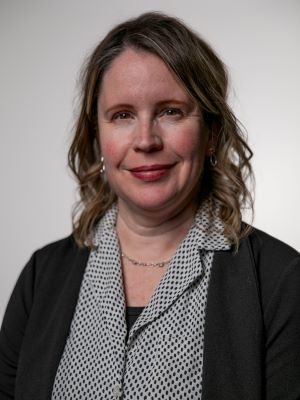
Erin OBryan PhD, CCC-SLP
Associate Professor with Tenure
Department of Communication Sciences and Disorders · College of Health Professions
Ahlberg Hall 427A
Main Campus
Overview
Erin O’Bryan, PhD, CCC-SLP, is an Associate Professor in the Department of Communication Sciences and Disorders (CSD) at Wichita State University and a member of the Institute for Rehabilitation Medicine and Assistive Technology (IRMAT). Dr. O’Bryan is a licensed and certified Speech-Language Pathologist who has provided skilled speech-language therapy in Kansas (full licensure), Indiana (full licensure), and Arizona (Clinical Fellowship).
Dr. O’Bryan’s research interests include person-centered storytelling in aphasia treatment, care partner engagement in therapy, Melodic Intonation Therapy, community education about aphasia and supported communication techniques, verb event structure, and sentence comprehension and production.
In 2024, her person-centered storytelling research was featured in an Aphasia Access podcast entitled Engaging Care Partners, Sharing Stories, and Waffle Night Celebrations: A Conversation with Harold Regier and Erin O’Bryan (Episode #123).
Academic Interests and Expertise
2003 – PhD, Linguistics, University of Arizona
2007 – MS, Speech, Language, and Hearing Sciences, University of Arizona
1997 – BA, Linguistics, University of Kansas
Areas of Research Interest
Dr. O’Bryan’s areas of research interest include aphasia treatment, care partner and family engagement in therapy, supported storytelling, Melodic Intonation Therapy, community education about aphasia and supported communication strategies, sentence processing, and the syntax-semantics interface.
Areas of Teaching Interest
Dr. O’Bryan currently teaches Masters level courses in Aphasia, Voice, and Dysphagia and an undergraduate level course in Anatomy and Physiology of the Speech and Hearing Mechanisms. Dr. O’Bryan occasionally teaches Cognitive Communication Disorders.
Publications
* indicates student/mentee co-author
Newman, C.*, O’Bryan, E. L., Musaji, I., Parham, D. F., & Harrington, J. (2026). Group education for future healthcare professionals on aphasia and communication partner strategies. Seminars in Speech and Language. https://doi.org/10.1055/a-2934-3800
Berk, H. M.*, O’Bryan, E. L., Musaji, I., Thomas, C. A., & Harrington, J. (2025). Educating future nurse practitioners and physician associates on pretreatment of swallowing in head and neck cancer. Teaching and Learning in Communication Sciences and Disorders 9(3). https://doi.org/10.61403/2689-6443.1400
Musaji, I., O’Bryan, E. L., & Bowen, A. (2025). Approaches to training speech-language pathologists to work with people with aphasia: A systematic review. American Journal of Speech-Language Pathology, advance online publication, 1-39. https://doi.org/10.1044/2024_AJSLP-24-00350
O’Bryan, E. L., Lu, H., Musaji, I., & Olmstead, A.* (2024). The maze task as a sentence formulation treatment for aphasia: A feasibility study. International Journal of Health Technology and Innovation, 3(03), 4–13. https://ijht.org.in/index.php/ijhti/article/view/141
O’Bryan, E. L. & Strong, K. A. (2024). Person-centered stories on the main stage in intervention: Case examples from the My Story Project, Aphasia! This Is Our World, and Aphasia-Friendly Reading. Perspectives of the ASHA Special Interest Groups, https://doi.org/10.1044/2024_PERSP-23-00272
O’Bryan, E. L., Regier, H. R., & Strong, K. A. (2023). “I wasn’t just sitting there”: Empowering care partners through the Aphasia-Friendly Reading approach. Aphasiology, https://doi.org/10.1080/02687038.2023.2272956
Darland, K., O’Bryan, E., Richburg, C. M., Bernstorf, E. (2023): The effects of varying melodic intervals in Melodic Intonation Therapy for persons with aphasia. Aphasiology, 37(8), 1263–1284, https://doi.org/10.1080/02687038.2022.2089971
DeDe, G. & O’Bryan, E. (2018). Chapter 11: Syntax and linguistic-based approaches. In L. LaPointe (Ed.), Aphasia and Related Neurogenic Language Disorders, 5th Edition. Thieme Medical Publishers, New York, NY.
O’Bryan, E., Folli, R., Harley, H., & Bever, T. G. (2013). Evidence for the use of verb telicity in sentence comprehension. In R. Folli et al. (Eds.), Syntax and its Limits, pp. 80-104. https://doi.org/10.1093/acprof:oso/9780199683239.003.0005
DeDe, G. & O’Bryan, E. (2011). Chapter 11: Syntax and linguistic-based approaches. In L. LaPointe (Ed.), Aphasia and Related Neurogenic Language Disorders, 4th Edition. Thieme Medical Publishers, New York, NY.
O’Bryan, E. (2001). Syntax in performance: Minimalist derivation in the Late Assignment of Syntax Theory. Coyote Papers 12: Language in Cognitive Science, 17-27. https://coyotepapers.sbs.arizona.edu/volume-12-2001
Hayes, R., Lewis, W., O’Bryan, E., & Zamuner, T. (Eds.) (2001). Coyote Papers 12: Language in Cognitive Science.
O’Bryan, E. (2000). Processing differences in synthetic versus natural speech: Evidence from garden path sentences. MIT Working Papers in Linguistics, 38, 171-179. http://mitwpl.mit.edu/catalog/mwpl38/
Weinberg, J., O’Bryan, E., Moll, L., & Haugen, J. (Eds.) (2000). Coyote Papers 11: Special Volume on Native American Languages.
Professional Experience
Communication Sciences and Disorders Dept, Wichita State University: Associate Professor, 2026 to present, Assistant Professor 2019-2026.
Speech, Language, & Hearing Sciences Dept, Purdue University: Visiting Scholar and Adjunct Instructor, 2009-2013.
Gerontology Center, Lifespan Institute, U of Kansas: Post-doctoral Affiliate, 2008–2009.
Aphasia Research Project directed by Pélagie Beeson, Speech, Language, & Hearing Sciences (SLHS) Dept., U of Arizona, Tucson: Research Specialist & SLP Clinical Fellow, 2008, Research Assistant, 2006–2007.
Language & Cognition Laboratory directed by Thomas Bever, Linguistics Dept., U of Arizona, Tucson: Post-doctoral Research Associate, 2004–2005, Research Assistant/Associate, 1997–2003.
Clinical Experience
Professional certification & Licensure
- Speech Language Pathologist License, Kansas Dept. of Health & Environment, 2009-2010, 2015 to present
- Speech Language Pathologist, Certificate of Clinical Competence, American Speech-Language-Hearing Association (ASHA), 2009 to present
- Speech Language Pathologist, Indiana Professional Licensing Agency 2009-2015
- Temporary License, Speech Language Pathologist, Arizona Department of Health Services, 2008-2009
Life Care Center of Wichita, Wichita, KS, Speech Language Pathologist, 2015-2021
Rehab Care, Homestead Health Center, Wichita, KS, Speech Language Pathologist, 2015
Paragon Rehabilitation, St. Elizabeth Healthcare in Delphi, IN and St. Mary Healthcare in Lafayette, IN, Speech Language Pathologist, 2014-2015
Franciscan St. Elizabeth Health, Lafayette, IN: Speech Language Pathologist, 2009-2014
Franciscan St. Elizabeth Health, Crawfordsville, IN: Coordinator, Stroke and Aphasia Support Group, 2009-2012
St. Luke’s Health System, St. Luke’s South, Overland Park, KS: Speech Pathologist, 2009
Aphasia Research Project, U of Arizona, Tucson: Clinical Fellow, Research Speech-Language Pathologist, 2008
Southern Arizona VA Health Care System, Tucson, AZ: Clinical Externship, 2007
U of Arizona Speech-Language Clinics for Adults & Children: Graduate Clinician, 2006-2007
Awards and Honors
- Wichita State University College of Health Professions Excellence in Research Award, 2026
- Kansas Board of Regents Tenure-Track Faculty Member of the Year, 2025
- Wichita State University College of Health Professions Alpha Eta National Honors Society, 2022
- Galileo Circle Scholarship, University of Arizona College of Science, 2006
- American Speech-Language-Hearing Foundation Graduate Student Scholarship, 2005
- UMI Distinguished Dissertation Award Nomination, Social & Behavioral Sciences Division. My dissertation was the one chosen from U of Arizona for the national competition in 2003-2004.
- Phi Beta Kappa Honors Society, member since 1996
- University of Kansas Honors Program, member 1992-1997
Grants
-
University Research and Creative Activities Award (URCA): “Supported Conversation for Aphasia Training for Healthcare Professionals,” Role: PI, amount $4,500, for grant period 12/1/2025 to 12/31/2026.
-
Undergraduate Research and Creative Activities Grant (UReCA Hub): “Being Wrong Feels Right: Predictive Responses of Expected and Unexpected Variations During Active Music Listening Using Multi-Modal-fNIRS-EEG Analysis,” Role: PI, Faculty Mentor, amount $1,500, for grant period 1/1/2026 to 6/30/2026. This award supported undergraduate McNair Scholar Garett D. Knight.
- Summer Undergraduate and Graduate Research Award (SUGRA): “From Sound to Synapses:
The Neural Correlates of Experiencing Music,” Role: PI, Faculty Mentor, awarded 5/2025 for grant period 6/1/2025 to 8/31/2025. This award supported undergraduate McNair Scholar Garett D. Knight.
- Regional Institute on Aging (RIA) Research Award: “The Role of Melodic Interval in Melodic Intonation Therapy,” Role: PI with Co-Investigators Dr. Amy Chesser, Dr. Elaine Bernstorf, and Dr. Cynthia Richburg, awarded 6/30/2023 for grant period 6/30/2023 to 6/29/2024.
- Multi-Disciplinary Research Project Award (MURPA): “Computerized Sentence Building as a Therapy Tool for People With Aphasia,” Role: Co-PI with Dr. Huabo Lu, awarded 12/2/2020 for grant period 1/1/2021-6/15/2021.
- Health Concepts Foundation (community non-profit organization): “Making Electrical Stimulation Therapy for Swallowing Dysfunction Available to the Community Through WSU’s Speech Language Hearing Clinic,” Role: PI, awarded 1/13/2020 for grant period 1/13/2020-12/31/2020.
- University Research/Creative Projects Award (URCA): “Effect of the Word Maze Treatment in People With Aphasia: A Pilot Study,” Role: PI, awarded 12/5/2019 for the grant period 12/5/2019-12/31/2020.
- National Science Foundation Doctoral Dissertation Improvement Grant #0132380: “Event Structure in Language Comprehension,” co-PI with Dr. Thomas G. Bever, 2002-2003.
- U of Arizona Graduate & Professional Student Travel Grant for presentation at “It’s About Time” workshop at Linguistics Society of America Summer Institute in East Lansing, Michigan, 2003.
- U of Arizona Graduate & Professional Student Travel Grant for presentation at Architectures and Mechanisms for Language Processing Conference in Glasgow, Scotland, 2002.
- Undergraduate Research Award for Linguistics research “The Social Markers of Vowel Laxing Before /l/” from U of Kansas Honors Program, 1995.
Areas of Service
- Wichita State University Faculty Senate 2025-2027
- College of Health Professions Faculty / Staff Affairs Committee 2020 to present